
How to Get Court Records
The DeKalb County Circuit Clerk holds the Circuit and District Court docket and files. Remote users can buy case detail and available images through Just One Look. Prefer to view a public electronic record for free? Visit the clerk during business hours. A quick call can confirm the division. Ask about the current fee and payment method. For a copy by mail, the local form documents the request.
Pull the court and case number from a notice, pleading, or receipt first. Then name the exact item: the Case Action Summary, a specific order, the final judgment. A vague request by name alone can trigger a search charge. It may still return no match.
- Identify Circuit or District Court, the case number if known, the party name, and an approximate year.
- Use Just One Look for paid remote access, or inspect the public file at the clerk’s Suite 200 counter.
- Call 256-845-8525 to confirm the division, total cost, and accepted payment before ordering.
- For mail, complete the DeKalb record-request form, prepay, and include a stamped return envelope.
- Mark whether certification is needed and allow the stated two weeks for the mailed process.
Three DeKalb Court Record Layers
In DeKalb County, a court record can mean three different things. The docket itself is the dated index, called a Case Action Summary in Alabama practice. Beneath it sit the filed documents. These are the complaint, motion, order, return, or judgment each entry names. A certified copy is a third layer. It is a clerk-attested reproduction of a filed or recorded original.
| Record layer | Best use | Important limit |
|---|---|---|
| Case Action Summary | Track filings, settings, rulings, and disposition | An entry is not the full text of its document |
| Filed document | Read the actual terms of a pleading, order, or judgment | Not every image is remotely available |
| Certified copy | Obtain clerk-attested proof of a filed original | Certification adds a fee and must be requested |
The difference matters when an exact ruling controls. A docket label may say judgment was entered, but the signed judgment holds the operative terms.
Types of Court Records
Circuit and District records in DeKalb County span civil, criminal, domestic-relations, child-support, traffic, juvenile, and warrant divisions. Access depends on the record itself and any confidentiality rule or court order. Part of a file may be restricted. Even then, the clerk may still release the case summary. Ask before assuming a file is closed.
- Case Action Summaries and dated event registers
- Complaints, petitions, answers, motions, and service returns
- Notices of setting, continuances, and hearing orders
- Judgments, dispositions, sentencing orders, and appeal entries
- Public cost and payment entries when exposed in the record
Probate and estate files live with the DeKalb County Probate Court. City traffic and ordinance cases belong to the issuing Municipal Court. The Circuit Clerk's form says this plainly: municipal, federal, other-county, and other-state records are excluded.
When DeKalb Court Records Are Archived
Imaging does not put every old DeKalb County court record into current remote coverage. The local form offers a separate archive or microfilm search. Help the clerk by giving an approximate year. Include the court level, the case type, and every known case number. That detail points staff to the right stored record.
Retention follows Rule 31, which treats juvenile material specially. An archived file faces the same access limits as a current one. The $25 archive search covers retrieval work only. It is not a promise that a record exists or is public.
Inside DeKalb’s Court Record Form
The local PDF beats a generic public-record letter for precision. It asks what specific information you want. It also requests case numbers if known, limited identifying details, and a Yes or No certification choice. Add your name, mailing address, phone number, and the total due. Payment is nonrefundable and guarantees no match.
| Specific request | Name the Case Action Summary and each filing or order needed. |
|---|---|
| Case number | Use every known number to narrow the DeKalb County court record search. |
| Identifying detail | Add only what is needed, such as an alias or date of birth. |
| Certification | Select Yes only when a clerk-attested copy is required. |
| Return details | Provide the mailing block, phone contact, payment, and stamped envelope. |
Mail the form to Todd Greeson, Circuit Clerk, P.O. Box 681149, Fort Payne, AL 35968-1149. Personal checks are not accepted, and the form promises no email delivery or same-day certified copies.
What a Court Record Contains
An Alabama case file typically opens with the basics. Expect the court, county, case number, style, filing date, case type, status, and assigned judge. Party and counsel names usually follow. From there, each filed act and court event appears in date order. Details vary by division, and the clerk publishes no official DeKalb abbreviation list.
| Case number | The unique identifier shown on the notice or pleading; copy its prefix, year, and sequence exactly. |
|---|---|
| Parties | Names and roles such as State, plaintiff, defendant, petitioner, or respondent, subject to privacy limits. |
| Pleadings | Complaints, petitions, answers, motions, returns, and other filed papers. |
| Orders and judgments | Signed rulings whose full terms may require the document image or copy. |
| Docket entries | The chronological list of filings, service, settings, continuances, rulings, and disposition. |
| Financial fields | Costs, fines, receipts, or balances where the public view makes them available. |
Transcripts are separate. The court reporter generally prepares them, so start with the assigned judge's office or the clerk to identify the reporter and the request process. The clerk posts no local transcript rate.
DeKalb Court Record Transcript Requests
A Case Action Summary may show that a hearing or trial occurred. It is not a word-for-word transcript. Start with the assigned judge's office or the Circuit Clerk to identify the reporter for that proceeding. Then ask for the reporter's process and estimate.
Exhibits need their own request. They may sit with the clerk or court. They may have been returned, or may be restricted. The responsible office supplies any transcript rate or exhibit-copy path, since no official DeKalb source sets one.
Records Outside DeKalb’s Clerk Form
The court where the case was filed controls custody. Henagar, Fort Payne, Rainsville, Collinsville, and Crossville each keep their own municipal files. The official Henagar City Hall contact page lists the city office that supports Henagar's local court channel.
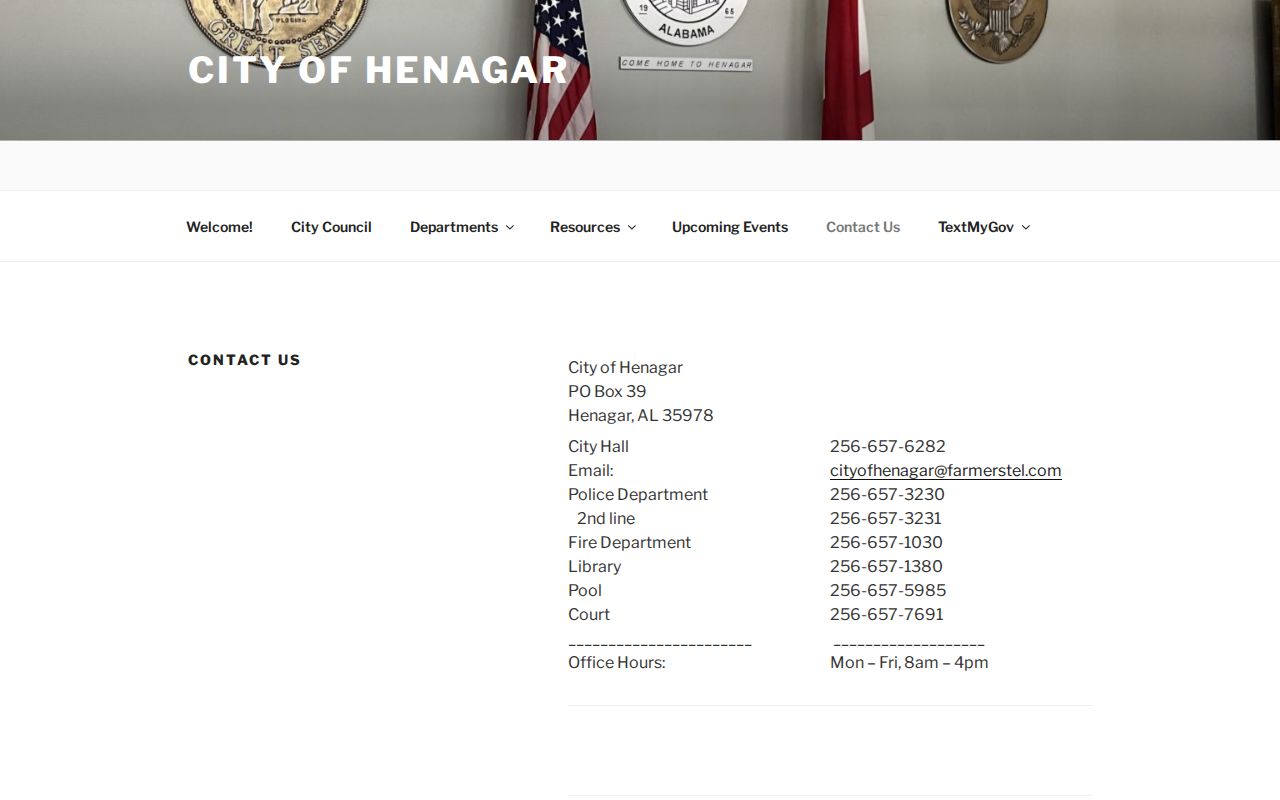
A city contact helps you find the municipal custodian. It does not create a complete DeKalb County court record database, and a city citation should still begin with the named Municipal Court.
Federal cases run on a separate track. DeKalb County sits in the U.S. District Court for the Northern District of Alabama. That court's CM/ECF and PACER explanation distinguishes the filing system from the public query service.
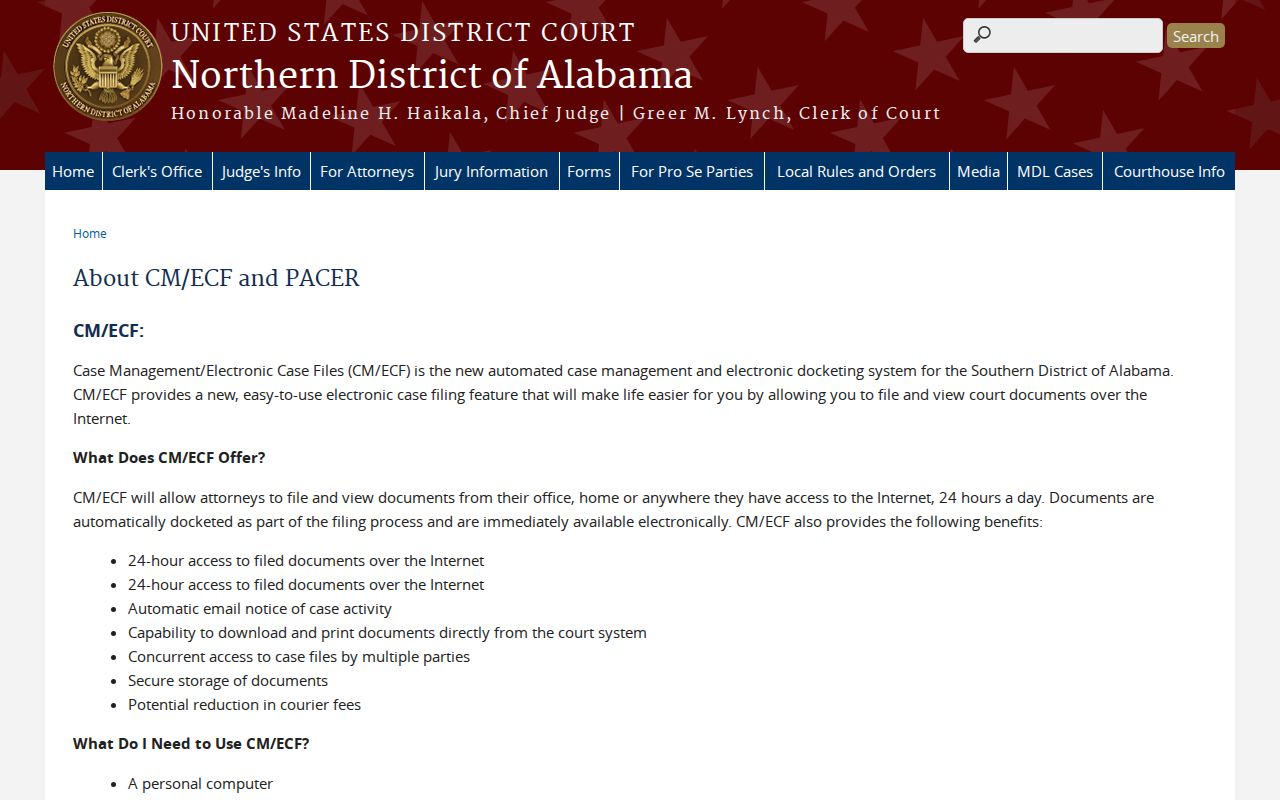
That federal path is wholly separate from Just One Look and from the DeKalb Circuit Clerk's request form. Older permanent federal files may rest with the National Archives at Atlanta instead.
Certified Copies and Fees
A plain copy works fine for most reading. Certification is different: the clerk attests to the copy, and that service only exists for papers actually filed or recorded with the court. Under Alabama Judicial Administration Rule 30, the clerk can insist on a written request, require payment and postage up front, and keep the original file in clerk hands throughout.
| DeKalb record item | Amount | Scope |
|---|---|---|
| Computerized search | $10 per name | No result guarantee; nonrefundable |
| Archived or microfilmed search | $25 | Older material outside current electronic coverage |
| Paper-record examination | $20 | Clerk examination, distinct from viewing a known file |
| Copies, first 20 pages | $5 total | Paper or electronic pages |
| Each page after 20 | $0.50 | Added per page |
| Certification | $5 each | Select certification on the form |
| Color copy or photo | $5 each | Per color page or photograph |
DeKalb County Circuit Clerk
300 Grand Avenue South, Suite 200
Fort Payne, AL 35967
256-845-8525
Weekdays, 8:00 a.m. to 4:00 p.m.
DeKalb Court Record Privacy Changes
Alabama rewrote its record-privacy landscape on January 1, 2025. The Court-Record Privacy and Confidentiality Rules now govern public access, excluded records, protected identifiers, redaction, sealing, and motions to reach sealed material. They reach DeKalb County court records even when a case was filed years before that date.
So a public Case Action Summary may leave out an image or a protected name. That omission never means the case did not exist. Full Social Security numbers, account numbers, protected victim details, and certain minor or protected-address data stay out of ordinary public view.
Free DeKalb Court Record Viewing
Free viewing and free copies are two different things. Alabama Court-Record Privacy Rule 401 lets anyone inspect electronic dockets and filed Circuit and District records at no charge in the clerk's office during regular hours, subject to confidentiality rules and court orders. When paid remote access does not fit, that counter channel is the practical option.
The official sources promise no set number of terminals, no free staff research, and no guarantee that every image has been scanned. Ask for the division and case-action summary at Suite 200. Check the device and photography rules before you try to capture a record.
Key distinction: Rule 401 protects in-office viewing of eligible electronic records. Search work, paper copies, certification, postage, and archive retrieval may still carry charges.
Public Access and Sealed Records
Public access has real limits. Alabama's court-record rules grant a general right to inspect and copy, but statutes, court rules, and case-specific orders can close material off. Juvenile and youthful-offender files, grand-jury material, protected victim information, presentence reports, and other sensitive categories sit outside ordinary public records.
Redaction, sealing, and expungement each do different work. Redaction hides protected details inside an otherwise open record. Sealing restricts access under a court order after the required findings, while expungement is a separate statutory remedy. None of these terms means a search failed.
Key Rules:
Ala. Code § 36-12-40 states the public-writing inspection and copying right, subject to lawful exceptions.
Alabama Court-Record Privacy Rules 104 and 401 set the access baseline and the free clerk-office viewing route.
Ala. Code § 12-15-133 protects juvenile legal and social records.
Rule 33 draws a line between compiled court data and looking at one case. The Administrative Office of Courts controls those broader electronic releases, and the rule bars unauthorized resale.
Federal Versus DeKalb Court Records
Don't confuse federal fees with DeKalb County Circuit Clerk charges. The official PACER fee explanation sets out the current public-query rate and the quarterly waiver.
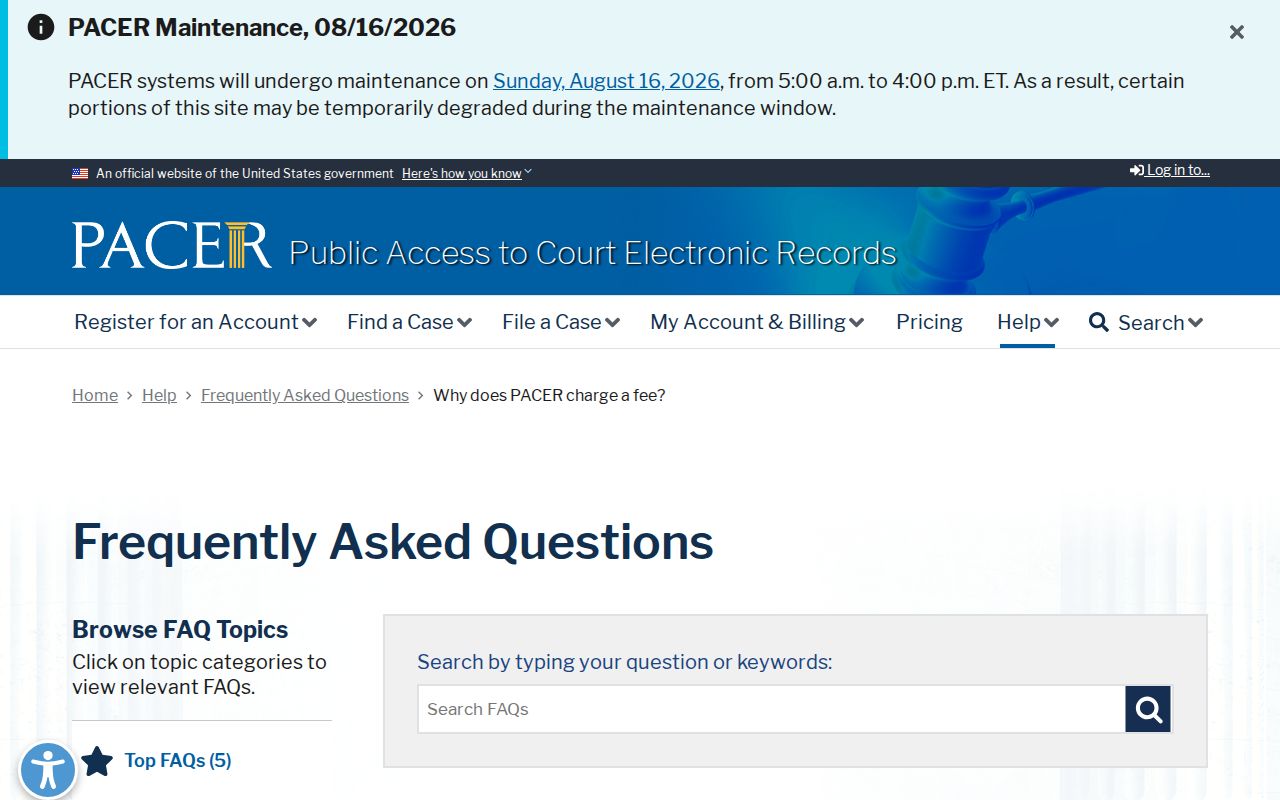
In 2026, PACER bills $0.10 per page. A single document or case-specific report carries a general $3 cap, and use of $30 or less in a quarter is waived entirely. Name searches, non-case reports, and transcripts fall outside the cap. Remember, a PACER copy is never a DeKalb County clerk-certified state record.
For state cases, run the DeKalb County case search first to pin down the number before requesting a document. That step cuts confusion, especially where two people share a similar name.