
The DeKalb County Court Calendar
The DeKalb County court calendar is not one list for every courthouse and city. Circuit Court settings cover felony, major civil, domestic-relations, and other matters within the Ninth Judicial Circuit. District Court settings include misdemeanors, preliminary felony proceedings, state traffic, small claims, unlawful detainer, and civil claims within its lawful limit. The DeKalb County Circuit Clerk keeps the case records for both state trial courts. Each municipal court keeps its own city calendar, while the Probate Court has a separate custodian.
The official annual Circuit Court calendar provides a broad planning view, but it is not a substitute for the live setting in one case. A case-action summary records dated events, including notices and continuances. The judge controls the calendar, and the clerk records what the court enters. For that reason, the newest order or notice tied to the right case number has more value than an old calendar entry or a general term calendar.
DeKalb County Court Calendar Search
Alabama's Search Docket form offers the most direct public calendar query found for DeKalb County. It asks for a county, a setting date, and an optional last name. Leaving the surname blank can return the docket for the selected date. The form also warns that some cases may not appear electronically. A blank result is therefore a reason to check another channel, not proof that no DeKalb County court calendar setting exists.
The official Search Docket interface shows how narrow the query is:
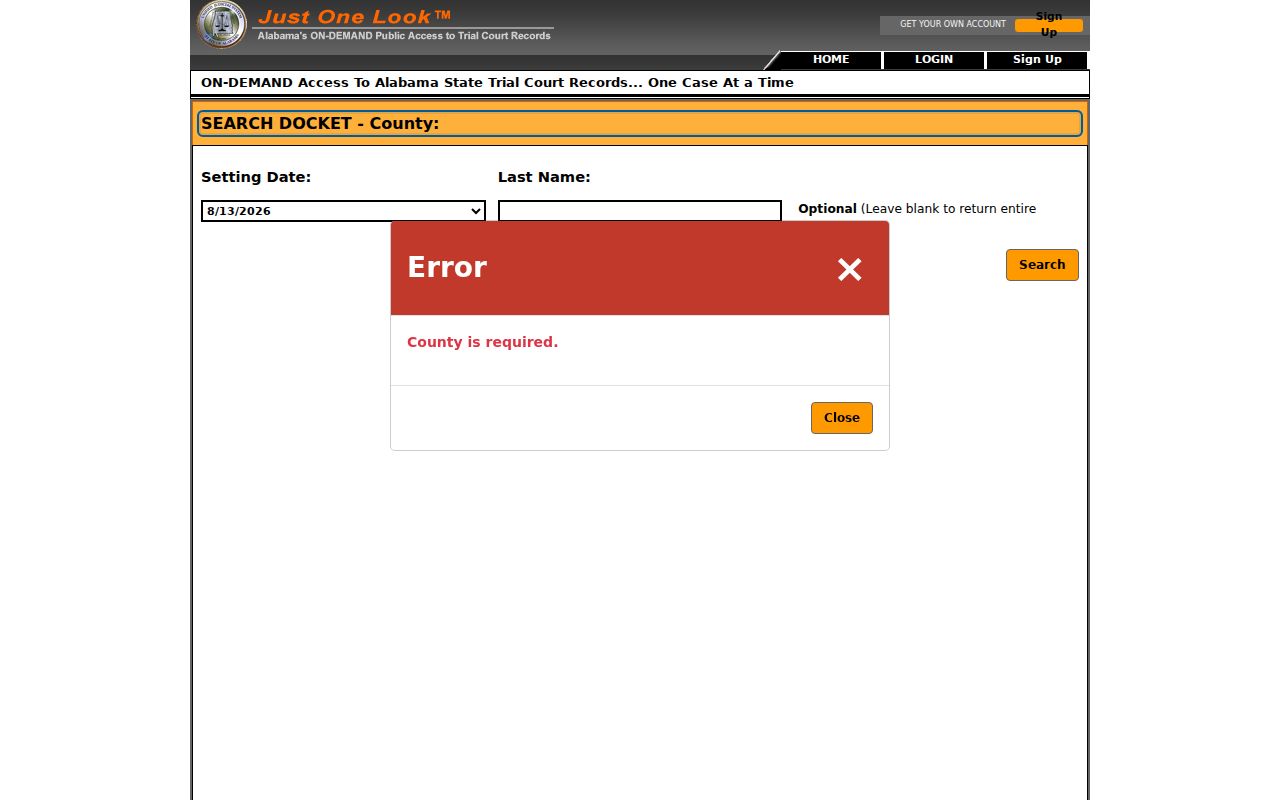
The image reinforces the key limit: a date search is useful only after the correct county and likely day are known. If a party needs the full event history, the separate DeKalb County case search can help locate the case-action summary through the state system. Search Docket and case detail serve related but different jobs.
How to Find Your Court Date
Start with the court printed on the citation, summons, notice, or order. That first check prevents a city matter from being sent to the DeKalb County Circuit Clerk or a state case from being sent to a municipal clerk. Keep the exact case number close at hand. Names alone can point to the wrong file, while the number ties the setting to the right court level and case.
- Read the latest served notice or citation and identify Circuit, District, Probate, or the named Municipal Court.
- Search the online docket by DeKalb County, setting date, and optional surname, or use Just One Look for the newest case event.
- Inspect the electronic docket at the Circuit Clerk's counter during regular business hours if remote access is incomplete or costs are not suitable.
- Call the DeKalb County Circuit Clerk at 256-845-8525 for a Circuit or District matter, or call the municipal clerk for a city case.
- Compare the newest notice or order with the web result, and ask counsel or the assigned judge's office when a conflict remains.
The DeKalb County Courthouse is at 300 Grand Avenue South in Fort Payne. The Circuit Clerk's office is in Suite 200 and lists weekday hours of 8:00 a.m. to 4:00 p.m. Rule 401 of the Alabama Rules of Court-Record Privacy and Confidentiality permits no-charge viewing of electronic District and Circuit dockets at the clerk's office, subject to restrictions. No official source promises a numbered public terminal or a printed daily list, so the clerk counter is the documented in-person channel.
DeKalb County City Court Calendars
Municipal schedules give the clearest recurring calendar patterns in DeKalb County. Fort Payne City Court meets Mondays at 4:00 p.m. in the City Hall courtroom. Rainsville holds regular court on the first, second, and fourth Tuesdays at 4:00 p.m., plus payment review on the first Tuesday. Henagar meets on the third Tuesday at 4:00 p.m. Collinsville meets on the fourth Tuesday at 5:00 p.m., and Crossville meets on the third Tuesday at 5:00 p.m. These patterns help route a search, but the case-specific notice still controls.
The Fort Payne Municipal Court page shows the local court route and its regular session information:
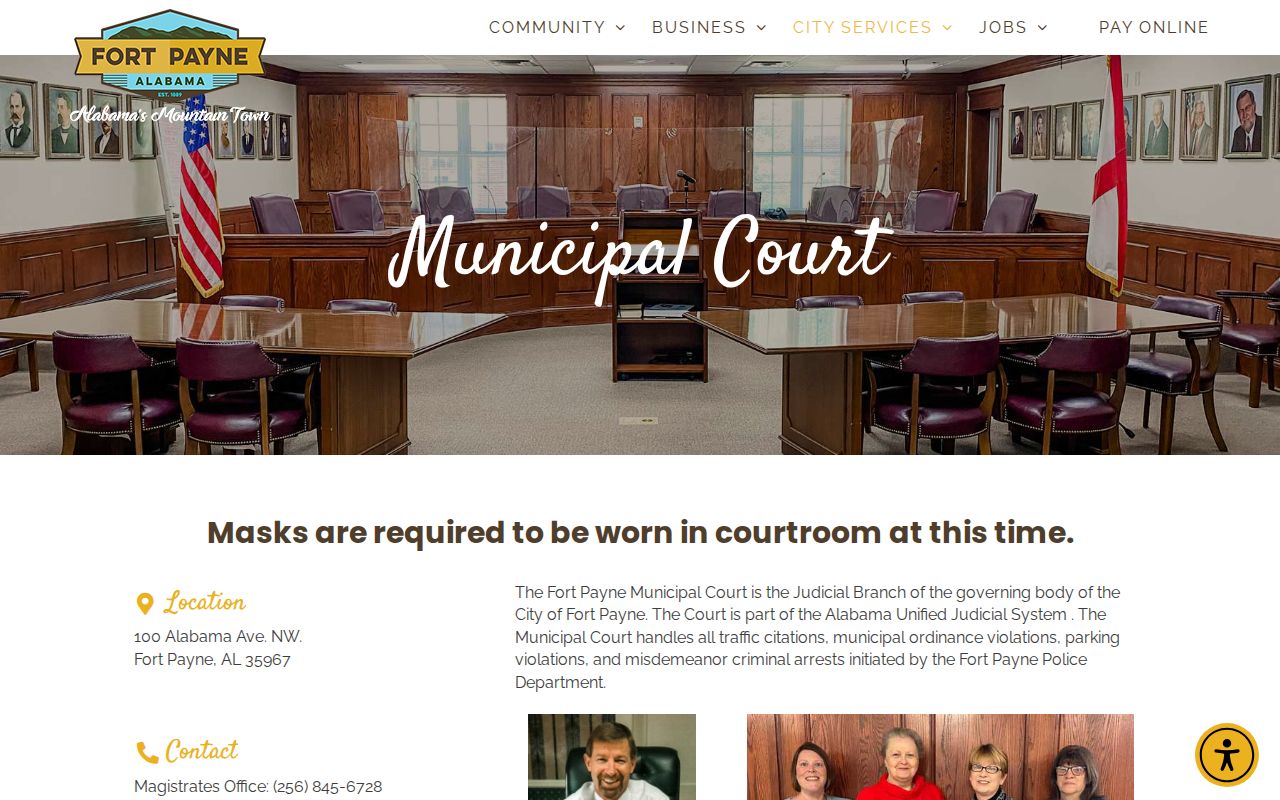
This view matters because a Fort Payne police ticket remains with Fort Payne Municipal Court unless an appeal later creates a DeKalb County Circuit Court record. The Circuit Clerk's mail-search form expressly excludes municipal records.
DeKalb County Tuesday Court Calendar
The Rainsville calendar shows why the event type matters as much as the day. Regular municipal court sits on three Tuesdays each month, payment review has its own first-Tuesday place, and the defensive-driving class meets on a different Tuesday. Only the current notice and municipal record can show which event applies to one case.
The Rainsville city government page separates regular court, payment review, and the defensive-driving class:
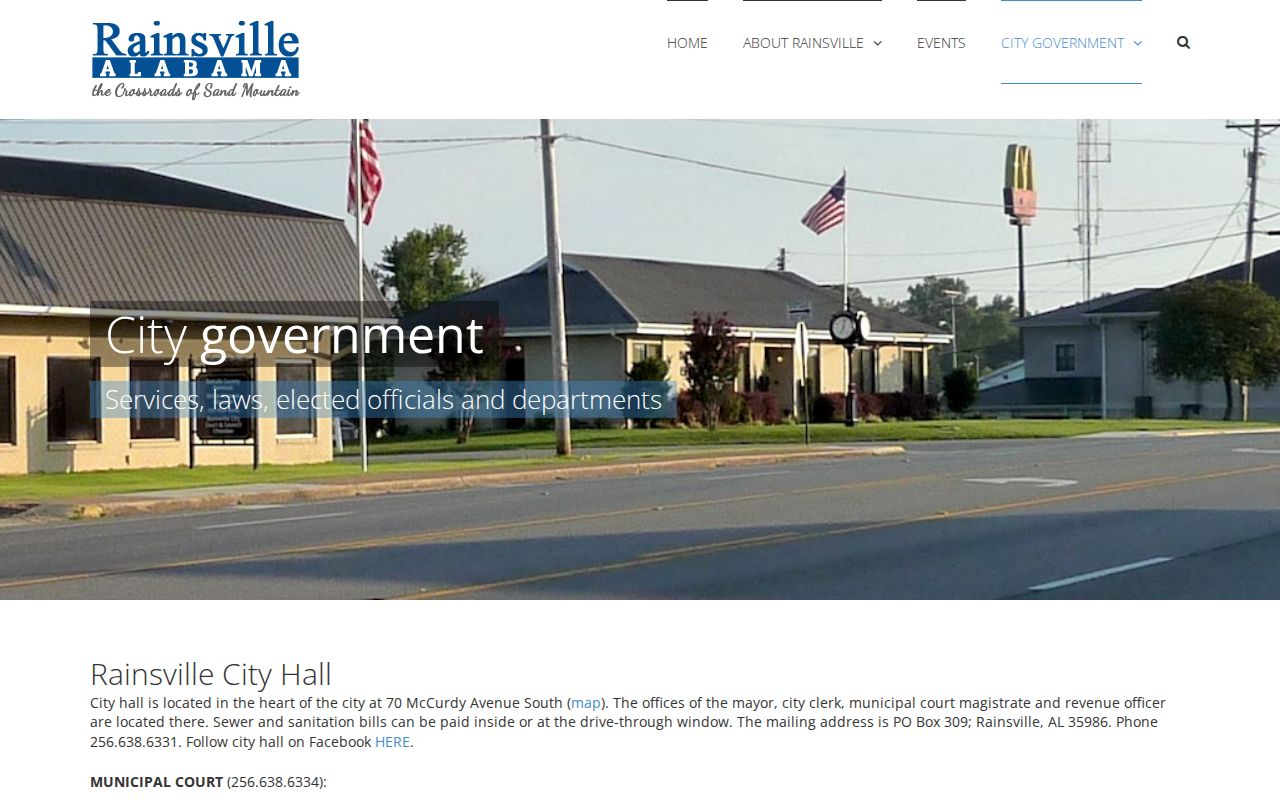
Those are distinct DeKalb County calendar events. A class date is not a hearing date, and a payment-review session should not be assumed to replace a regular court setting.
Reading a Court Setting
A DeKalb County court calendar entry should be read with its case header. First confirm the county, court level, case number, case style, and assigned judge. Then read the setting itself. A label may state the kind of event without giving the full purpose or all instructions. The served notice or order may carry a room and time that do not appear in a short case summary.
| Date | The scheduled day. Compare it with later continuance, reset, or cancellation entries. |
|---|---|
| Time | The stated start time, which may be a group docket call rather than an individual hearing slot. |
| Courtroom | The location shown on the notice or order; not every summary view displays a room. |
| Judge | The judge assigned to the case or scheduled event. The judge controls the calendar. |
| Setting Type | The event, such as arraignment, motion hearing, docket call, trial, sentencing, or review. |
A setting does not always mean trial. It may be a status check, plea setting, motion hearing, or review. Read the latest notice instead of guessing from a short label. If the exact purpose affects what must be filed or brought to court, confirm it with counsel or the responsible office.
DeKalb County Court Calendar Terms
Alabama court records use several common setting terms. No official DeKalb County abbreviation codebook was found, so these definitions describe the event concepts and do not claim that every division uses the same short code. The plain meaning helps distinguish a preliminary step from the final hearing.
- Arraignment
- The charge is stated and a plea is addressed.
- Docket call
- The court checks the status and readiness of a group of cases.
- Motion hearing
- The court hears a specific request for a ruling.
- Continuance or reset
- A setting moves to another date while the old event remains in the case history.
- Disposition
- The recorded outcome at that court level.
Initial appearance and preliminary hearing are also distinct. An initial appearance is the first judicial review after arrest. A preliminary hearing is a District Court probable-cause stage in a felony matter. Neither label alone proves that a Circuit Court trial date has been set.
Note: An entry label is an index description; obtain the actual notice or order when its exact terms control the next step.
Resets, Continuances, and Cancellations
An older DeKalb County court calendar date does not vanish when a case is reset. It stays in the chronological case-action summary as part of the case history. Look for the latest dated order, notice, or setting, then check whether it expressly continues or cancels the prior event. A request for a continuance is not the same as a granted continuance. Calling the clerk to ask about a date also does not move the case.
Closures can create a second information trail. Fort Payne published a weather cancellation for City Court and directed people to call the municipal court for a new date. The Fort Payne City Hall update is a concrete example of why a standing weekly schedule may not control a particular week:
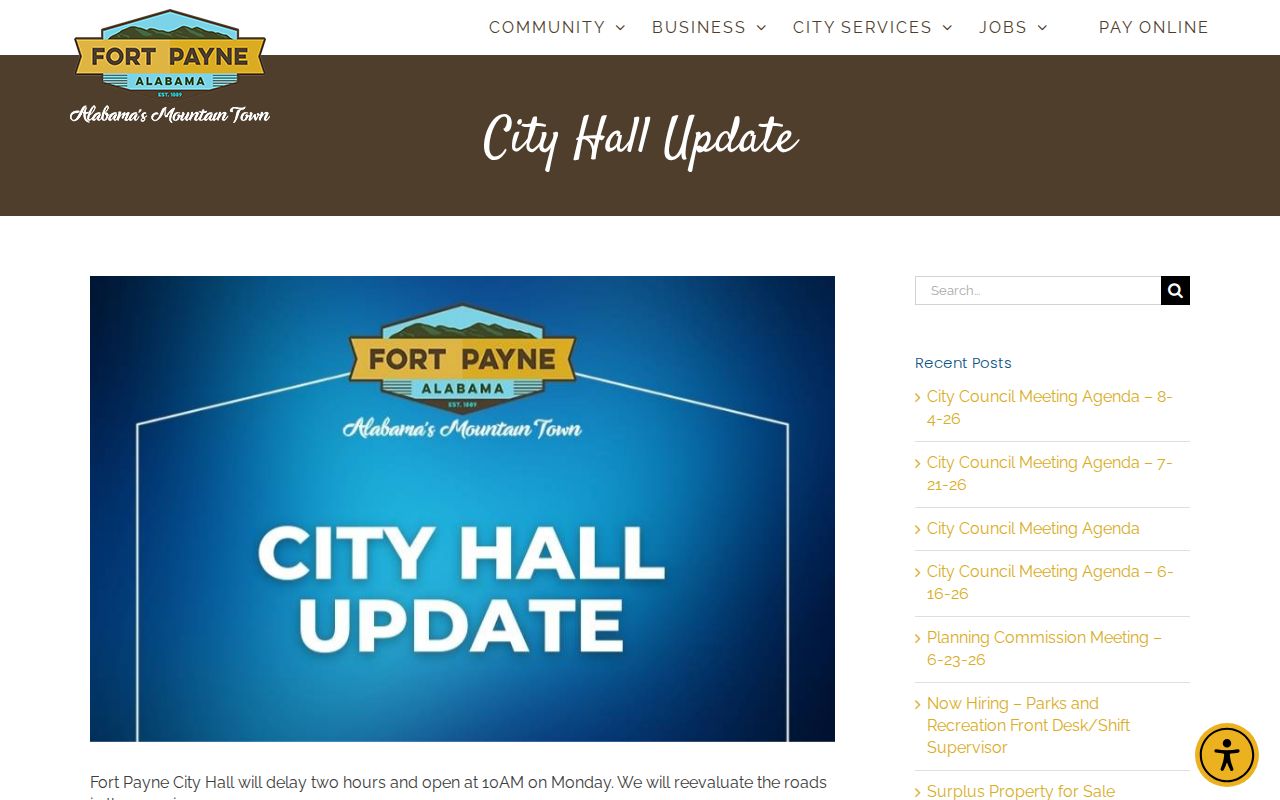
The notice shows the right response after a closure: do not pick a new date from the usual Monday pattern. Contact the court that cancelled the setting and obtain the date it assigned.
DeKalb County Calendar Notice Limits
DeKalb County attorneys may have a notice channel that is not open to the general public. AlaNotice sends weekly changed-setting information to Alabama attorneys who use an attorney code and password. It is a useful professional alert, but it is not a public DeKalb County court calendar and should not be presented as one.
The AlaNotice interface makes that access boundary visible:
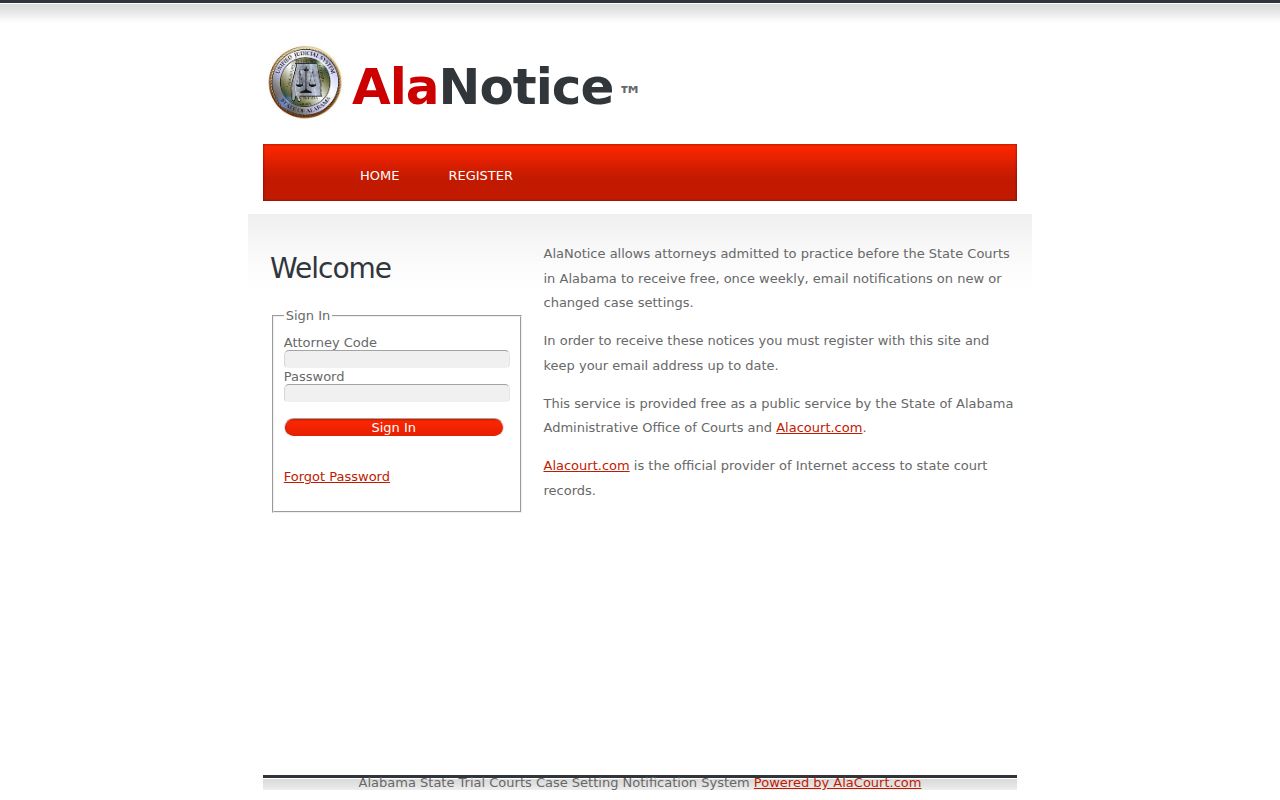
A party without attorney access still has sound options: the served notice, Search Docket, Just One Look, the free clerk-office view, and a call to the correct clerk. Counsel can also confirm a setting through professional channels. No official research source identified a public text-message reminder program for DeKalb County, so no such service should be assumed.
DeKalb County Monthly Court Calendar
Henagar illustrates why the issuing city matters. Its court meets at City Hall on the third Tuesday of each month at 4:00 p.m., and the city clerk is the practical source for a city case. A payment portal may help locate a fine, but it does not promise a full hearing calendar or a complete case-action summary. A DeKalb County court calendar search that starts only with the Circuit Clerk can therefore miss the proper municipal custodian.
The official Henagar Court page presents the monthly session and payment route:
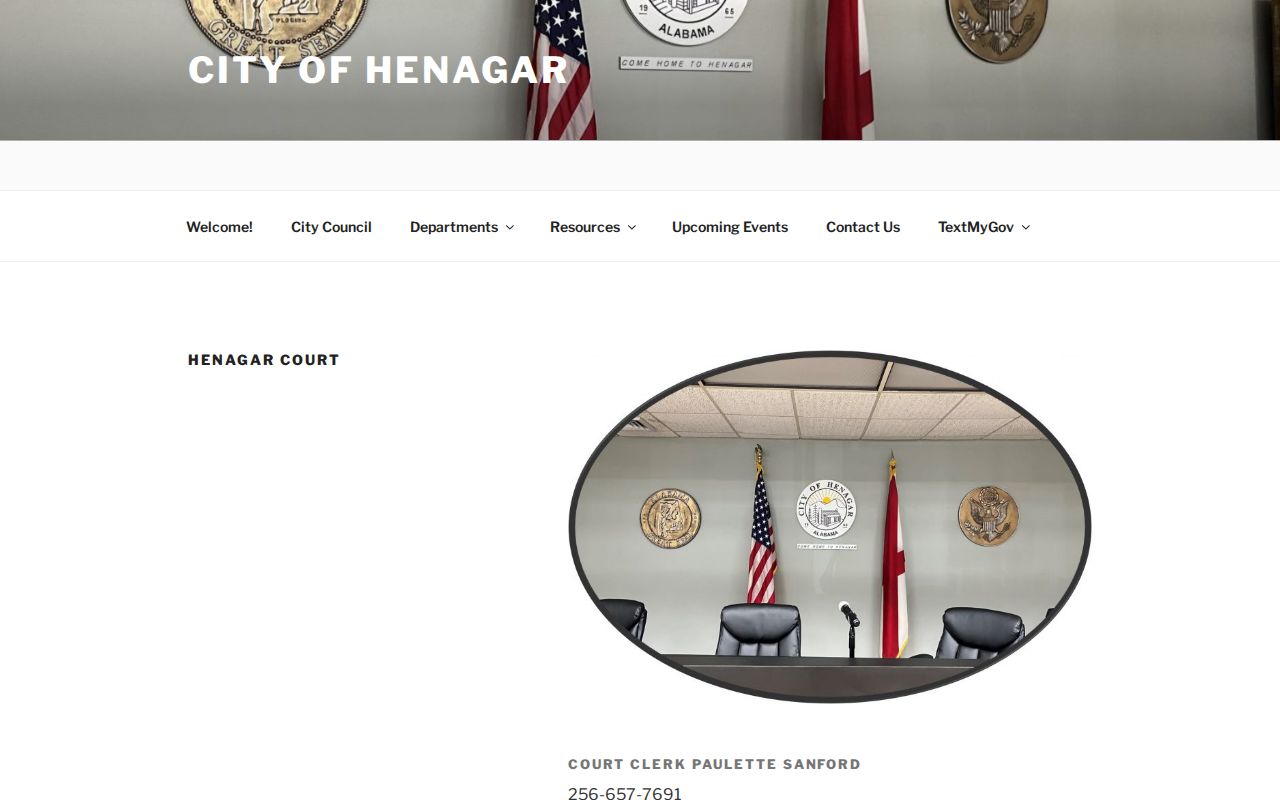
The recurring third-Tuesday pattern gives useful context, but the ticket or current court notice remains the case-specific source. If the portal does not find a payment record or the notice appears to conflict with the monthly pattern, call the Henagar clerk at 256-657-7691 rather than treating the no-match as a cancelled case.
What To Do If You Miss a Setting
Act at once after missing a DeKalb County court calendar setting. Contact counsel if represented. Then call the office that owns the docket, not merely the nearest courthouse. Circuit and District cases go to the DeKalb County Circuit Clerk. A city ticket goes to the city clerk or magistrate. Ask what the case record now shows, whether the judge entered an order, and what formal step is required. Clerk staff can state the record and office process, but they cannot provide legal advice or erase the missed event.
Missed a Setting? A failure to appear can lead to a warrant, bond consequences, added costs, or other court action.
Contact the responsible court and your lawyer promptly, and do not assume that a phone call itself creates a new setting.
Verify the next DeKalb County date in a current order or notice before appearing.
For a city citation, the municipal court's own instructions control. For a state traffic case, use the clerk's traffic division. A later appeal may create a Circuit Court entry, but that new record does not erase the lower court history. Keep both case numbers and all notices when the matter moves between levels.